
How to Use Your Maintenance Money Wisely
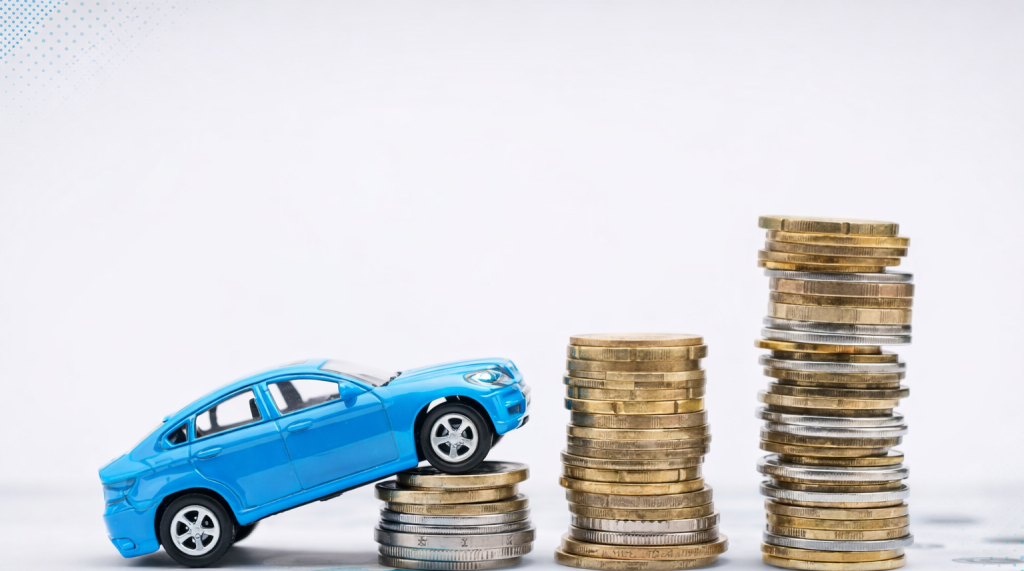
Use Your Maintenance Money Wisely When Renting Out Your Car on QuickAt
Renting out your car on QuickAt can be a smart way to earn extra income. But one of the biggest mistakes many hosts make is treating the maintenance money as profit. That money is there to protect your car, keep it reliable, and help you avoid big repair bills later.
If you want your car to stay in good condition and keep earning for you, you need a proper plan for tyres, services, wheel alignment, brake pads, clutch wear, and other parts that wear out over time.
1. Treat maintenance money as a car savings fund
The maintenance amount you receive from rentals should go into a separate savings fund for the vehicle. Do not mix it with your normal spending money.
Think of it like this:
- Minor services
- Major services
- Tyres
- Wheel alignment and balancing
- Brake pads and discs
- Battery, clutch, suspension, and other wear-and-tear items
The best approach is to keep this money aside every time your car is booked. That way, when the car needs work, you already have funds available.
2. Split your maintenance money into categories
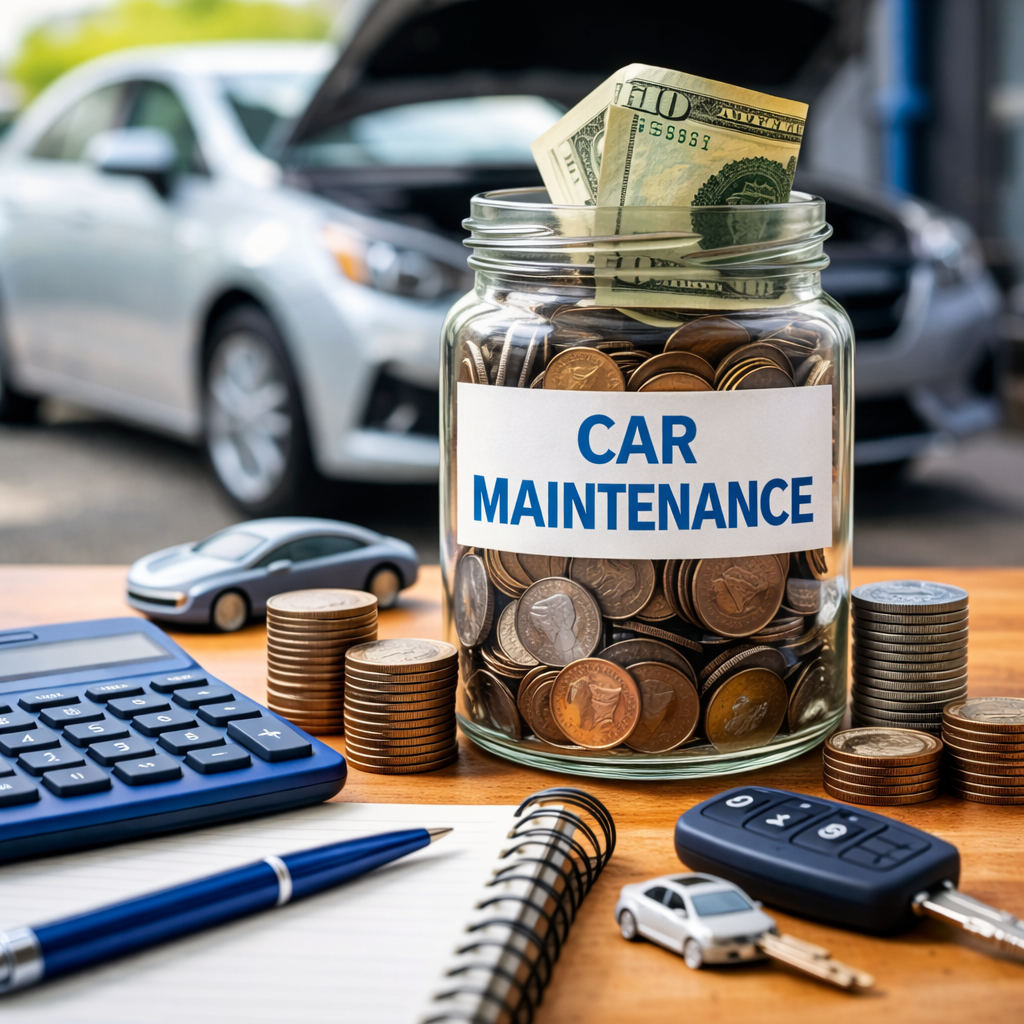
A simple way to manage the money is to divide it into maintenance buckets:
- 30% for tyres
- 25% for minor and major services
- 20% for brakes and suspension
- 15% for emergency repairs
- 10% for alignment, balancing, and small workshop costs
You can adjust this depending on your car, but the key point is to always save ahead.
3. When should you do a minor service?
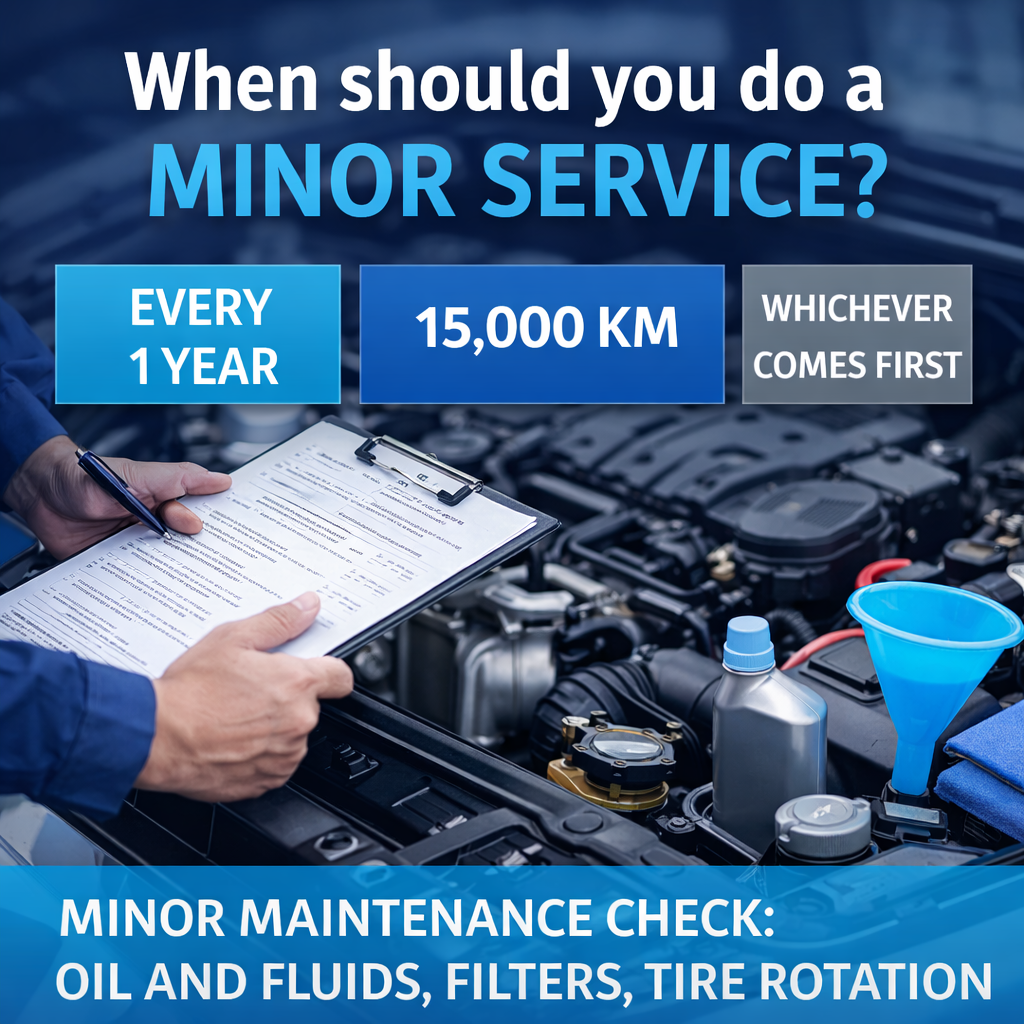
A minor service is usually done every 10,000 km to 15,000 km, depending on the car and the oil used. If your car is used often for rentals, it is safer to check it closer to 10,000 km.
What is usually done in a minor service?
A minor service normally includes:
- Engine oil change
- Oil filter replacement
- General inspection of brakes
- Check tyre condition and pressure
- Check fluid levels
- Check battery
- Check lights, wiper blades, and belts
- Inspect suspension and steering components
This service helps keep the engine healthy and catches small problems before they become expensive.
4. When should you do a major service?
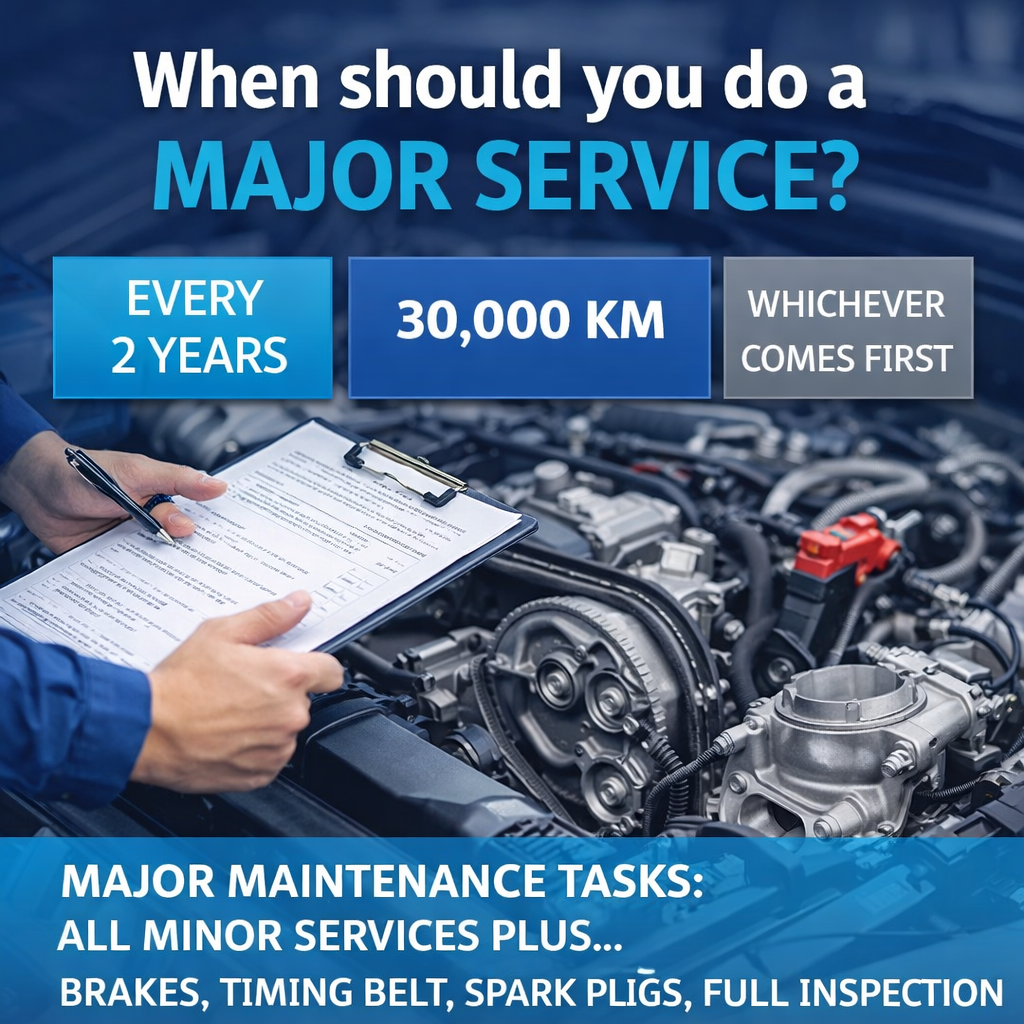
A major service is usually done every 30,000 km to 45,000 km, depending on the manufacturer. Some cars follow 30,000 km intervals, while others go longer. Always check the owner’s manual for the exact schedule.
What is usually done in a major service?
A major service often includes everything in a minor service, plus:
- Air filter replacement
- Cabin filter replacement
- Spark plugs replacement if due
- Fuel filter replacement if applicable
- Brake fluid check or replacement
- Coolant inspection or replacement
- Transmission oil check or replacement if required
- Full vehicle diagnostic check
- More detailed inspection of suspension, steering, belts, and hoses
A major service is more expensive, which is why saving part of your rental maintenance money is so important.
5. When should you do wheel alignment?
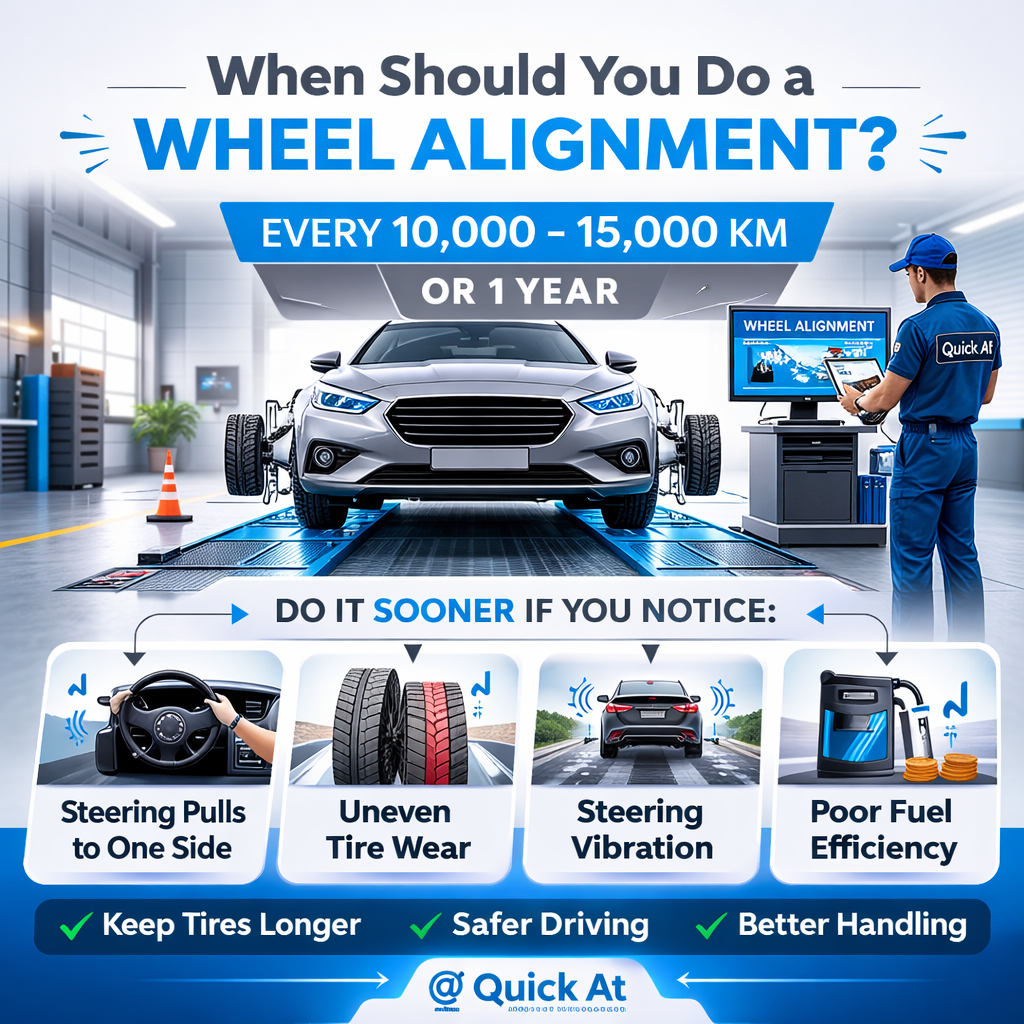
You should check or do a wheel alignment about every 10,000 km, or sooner if:
- The steering pulls to one side
- The steering wheel is not straight
- Tyres are wearing unevenly
- The car hit a pothole or curb
- You replaced suspension or steering parts
If your car is used often and drives on rough roads, alignment checks become even more important.
Why alignment matters
Good alignment helps:
- Tyres last longer
- Fuel consumption stay lower
- The car drive straight and safely
- Suspension parts wear more evenly
It is also wise to do wheel balancing whenever tyres are rotated, repaired, or replaced.
6. Save properly for tyres
Tyres are one of the biggest running costs on a rental vehicle. Depending on the brand and size, a full set can be expensive.
When do tyres usually need replacement?
Most tyres last around 40,000 km to 60,000 km, but this depends on:
- Driving style
- Road conditions
- Tyre quality
- Proper inflation
- Alignment and balancing
If your car is used for rentals, inspect the tyres regularly for:
- Low tread
- Sidewall damage
- Uneven wear
- Puncture damage
Because tyres are costly, it is smart to save for them every month rather than waiting until all four need replacing.
7. Parts that may need replacement at different kilometre intervals
These are general ranges only. Some cars last longer, and some need attention sooner.
Around 20,000 km to 30,000 km
- Air filter may need replacement
- Cabin filter may need replacement
- Brake pads may need inspection or replacement, depending on driving style
Around 30,000 km to 60,000 km
- Brake pads often need replacement
- Wiper blades may need replacement
- Tyres may need replacement
- Brake discs may need inspection or skimming/replacement
- Battery may start weakening depending on age
Around 60,000 km to 100,000 km
- Spark plugs may need replacement
- Brake discs may need replacement
- Shocks and suspension parts may start showing wear
- Transmission fluid may need replacement
- Engine mounts and bushings may need inspection
Around 80,000 km to 150,000 km
- Clutch may need replacement on manual cars
- Suspension components may need more serious attention
- Wheel bearings may need checking
- Belts, hoses, and cooling system parts may need replacement
Around 90,000 km to 120,000 km
- Timing belt may need replacement on cars that use one
- Water pump is often replaced together with the timing belt
This is why a rental host must never ignore the maintenance fund. Big repairs do not come every month, but when they come, they can be expensive.
8. Brake pads, clutch, and other high-wear items
Brake pads
Brake pads can last anywhere from 30,000 km to 60,000 km. If the car is driven in traffic a lot, they may wear out sooner.
Signs they need replacement:
- Squeaking noise
- Grinding noise
- Reduced braking performance
- Warning light on dashboard
Clutch
A clutch can last 80,000 km to 150,000 km, sometimes longer. But if drivers ride the clutch, it can wear out much faster.
Signs of clutch wear:
- Slipping when accelerating
- Burning smell
- Difficulty changing gears
- High clutch bite point
Because rental cars are driven by different people, clutch wear should be monitored carefully.
9. Best rule for QuickAt hosts
The smartest rule is simple:
Maintenance money is not profit. It is protection for your car.
If you use it correctly:
- Your car stays roadworthy
- Guests get a better experience
- You reduce breakdowns
- You avoid surprise repair bills
- Your vehicle stays available for more bookings
10. Final advice
Every car is different, so always follow the manufacturer’s service book or owner’s manual first. But as a general guide for a rental car:
- Minor service: every 10,000–15,000 km
- Major service: every 30,000–45,000 km
- Wheel alignment: about every 10,000 km or after pothole/impact damage
- Tyres: usually 40,000–60,000 km
- Brake pads: usually 30,000–60,000 km
- Clutch: usually 80,000–150,000 km
If you manage your maintenance money well, your car will not only earn you income today — it will keep earning for you for much longer